Authors: Ruth Roberts, Ksenia Blinova, Coby Carlson, Matthew Cato, Katherine Czysz, Tromondae K. Feaster, Xiaobo Han, Yuto Ishibashi, Yasunari Kanda, Mohamed Kreir, Paul Levesque, Norimasa Miyamoto, Jennifer B. Pierson, Timothy J. Shafer, Scott Schachtele, Christopher J. Strock, Takashi Yoshinaga, and Ikuro Suzuki
NeuroToxicology, 13 July 2026
Maestro MEA recordings support multi-site evaluation of human and rat neuronal models for in vitro seizure liability assessment.
Seizure liability remains a major safety concern in drug development and chemical exposure assessment, but current approaches often rely on late-stage animal studies that may not identify risk early enough to guide compound design. In this international multi-laboratory study, researchers evaluated whether MEA-based neural activity recordings could detect seizurogenic compounds across both human iPSC-derived neural cultures and primary rat cortical neurons. The study included 10 pro-convulsant compounds and 3 negative controls, tested across 7 laboratories on 3 continents.
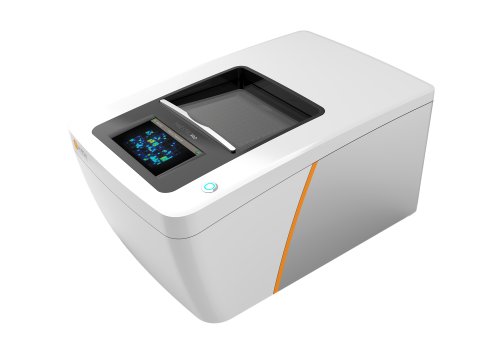
Using Axion BioSystems’ Maestro MEA platform, participating sites recorded spontaneous electrical activity before and after compound exposure, then analyzed spiking, bursting, and synchrony-related parameters. Both human and rat neuronal models generated MEA profiles indicative of seizurogenic activity, but the human iPSC-derived neural cultures showed greater consistency across laboratories. Mean interspike interval emerged as the most common cross-site parameter, decreasing for all tested compounds except picrotoxin, while other parameters—including median ISI, median burst rate, and median absolute deviation burst spike number—also showed useful trends.
The findings support MEA-based seizure liability testing as a promising new approach methodology (NAM) for earlier, human-relevant neurotoxicity assessment. The authors emphasize that model choice should be guided by the study goal: rat cultures may be useful for following up findings seen in rat studies, while human iPSC-derived models may be preferred when the aim is to predict and avoid human seizure risk.