Authors: Andrew P. Anderson, Sanghyun Kim, Allison J. Melton, Xiaoyun Ding, Wei Zhang, Alexander B. Saltzman, Anna Malovannaya, Matthew N. Rasband, and Yudong Gao
Nature Communications, 03 December 2025
Researchers use Maestro MEA to investigate how AIS-localized PP2A regulatory subunits selectively control neuronal network activity during development.
In this study, researchers investigated how the PP2A regulatory subunits Ppp2r2c and Ppp2r2a regulate protein phosphorylation and neuronal excitability at the axon initial segment (AIS) during neuronal development. Because the AIS is a critical hub for action potential initiation, understanding how phosphorylation is controlled in this compartment is essential for uncovering mechanisms that shape neuronal firing and network maturation.
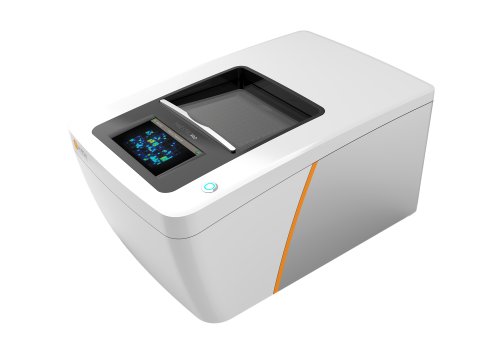
To directly assess functional consequences, the team used Axion BioSystems’ industry-leading Maestro MEA platform to measure spontaneous activity in CRISPR-edited neurons with altered AIS enrichment of PP2A subunits. Longitudinal MEA recordings revealed that depletion of Ppp2r2a and Ppp2r2c significantly reduced mean firing rate, burst frequency, and network burst frequency at later developmental stages, without altering neuronal morphology or cell viability as confirmed using impedance-based measurements with the MEA Viability Module. These results demonstrate that AIS-associated PP2A subunits fine-tune neuronal activity specifically through functional, rather than structural or survival-related, mechanisms—highlighting the power of MEA-based phenotyping to disentangle signaling-driven changes in neural network behavior.