Authors: Harshita Sharma, Jungeun Lim, Woochan Kim, Yeon Ju Kim, Dream Kim, Shinyull Lee, Chaeyeon Park, Stephen Rhee, Shruthy Kuttapan, Jungho Ha, Sang Wook Park, Kyunghoon Kim, Noo Li Jeon, Sunho Park, Yun-Hoon Choung, and Jangho Kim
Advanced Materials, 10 August 2026
Maestro MEA recordings show that microengineered human inner ear organoids exhibit higher spontaneous spike activity and respond to ototoxic perturbation.
Inner ear organoids provide a promising model for studying hearing loss and neurosensory disorders, but variability and incomplete maturation can limit their reproducibility and physiological relevance. In this study, researchers applied transient micro-topographical confinement during early pluripotent stem cell aggregation to improve inner ear organoid formation. The microengineered organoids showed more consistent structure, enhanced sensory epithelial organization, increased MYO7A+ hair cell-associated populations, and stronger expression of genes linked to sensory maturation, synaptic function, and ion channel activity.
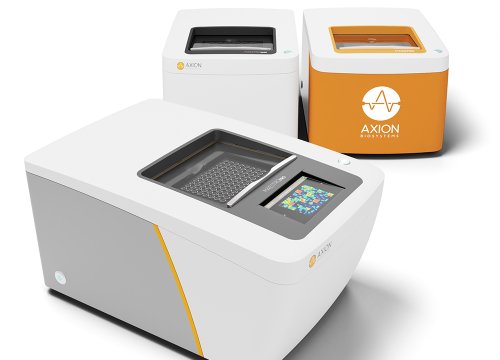
Using Axion BioSystems’ Maestro MEA system, the team recorded spontaneous extracellular activity from mature inner ear organoids. Microengineered human inner ear organoids exhibited significantly higher spike rates than conventional U-well-derived organoids, indicating enhanced electrophysiological activity. Cisplatin exposure reduced spike rate and burst activity, demonstrating responsiveness to ototoxic stress, while QX-314 suppressed spontaneous spike activity, supporting the contribution of sodium channel-dependent electrical activity. Together with transcriptomic, imaging, patch-clamp, and vascular co-culture analyses, these findings show that early micro-topographical cues can improve the reproducibility, maturation, and functional assessment of inner ear organoid models.