Authors: Giada Cattelan, Claudia Altomare, Giovanna Gentile, Alexandros A. Lavdas, Laura Sophie Frommelt, Chiara Volani, Luisa Foco, Pietro Girardi, Elisa Peducci, Amparo Guerrero Gerboles, Michele Miragoli, Luisa Petti, Peter P. Pramstaller, Lucio Barile, Serena Zacchigna, Irene Pichler, Alessandra Rossini, Alessandra Zanon, and Marzia De Bortoli
Molecular Therapy, 01 April 2026
Maestro MEA enables cell-type-specific electrophysiological analysis in a human neurocardiac co-culture model.
The cardiac autonomic nervous system plays a critical role in regulating heart function, but studying neurocardiac communication in human-relevant systems remains challenging. In this study, researchers developed a human iPSC-derived neurocardiac co-culture model combining sensory neurons and cardiomyocytes to investigate how neuronal signaling influences cardiac electrophysiology and drug responses.
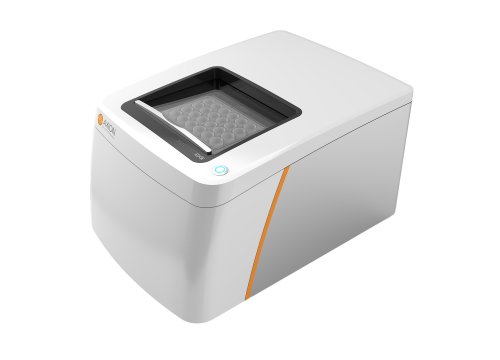
Using Axion Biosystems’ Maestro MEA platform, the team performed longitudinal electrophysiological recordings from sensory neurons, cardiomyocytes, and neurocardiac co-cultures. The researchers first characterized spontaneous sympathetic-like firing activity in the sensory neurons, identifying peak neuronal activity around day 40 of differentiation. Cardiomyocytes also exhibited stable, robust beating behavior, with expected increases in beat rate following isoproterenol treatment.
To investigate functional coupling between the two cell types, the researchers established compartmentalized neurocardiac co-cultures using ibidi inserts and monitored responses to nicotine treatment. MEA recordings demonstrated coordinated neurocardiac activity and revealed drug-dependent modulation across the co-culture system. Importantly, the platform enabled electrode-specific analysis of neuronal, cardiac, and integrated co-culture activity within the same experimental setup.
Together, this work establishes a human-relevant neurocardiac co-culture platform for studying autonomic regulation, cell–cell communication, and drug responses, highlighting the value of MEA-based electrophysiology for complex co-culture models.