Authors: Joseph S Durgin, Shin H Seo, Shadab Kazmi, Bakir Valentić, Chloe Leff, Martina Markovska, Xiaoling Jin, Feng Shen, Abdulla Berjis, Nandana Mukherjee, Ashwin Sannecy, Gabriela Plesa, Khatuna Gabunia, John Scholler, Saar I. Gill, Roddy S O'Connor, Carl H. June, and Saba Ghassemi
Blood, 16 April 2026
Maestro TrayZ enables real-time analysis of cytotoxic activity in rapidly manufactured IL-18-expressing CAR T-cells.
CAR T-cell therapies have transformed cancer treatment, but manufacturing delays, T-cell exhaustion, and limited persistence remain major barriers to broader clinical success. In this study, researchers developed a rapid, single-day manufacturing approach for non-activated CAR T-cells engineered to secrete interleukin-18 (IL-18), with the goal of preserving a more naïve-like and durable therapeutic state while maintaining anti-tumor potency.
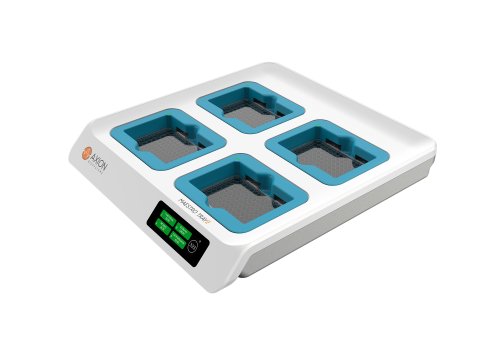
To evaluate cytotoxic function, the team used Axion Biosystems’ Maestro TrayZ platform to perform real-time impedance-based killing assays against neuroblastoma target cells. Despite retaining a metabolically quiescent and less differentiated phenotype, the non-activated IL-18 CAR T-cells demonstrated potent short-term cytolytic activity comparable to conventionally activated CAR T-cells over a 48-hour period. Importantly, IL-18 alone did not induce cytotoxicity, indicating that enhanced killing activity depended on CAR-mediated antigen recognition.
The researchers further showed that the non-activated IL-18 CAR T-cells exhibited enhanced metabolic fitness, increased spare respiratory capacity, reduced exhaustion marker expression, and improved persistence across lymphoma, leukemia, and pancreatic cancer xenograft models. Together, these findings suggest that rapid manufacturing approaches may help preserve stem-like T-cell states associated with long-term therapeutic durability while maintaining strong anti-tumor function.