Authors: Seohyun Kim, Youngsun Lee, Hyang-Ae Lee, and Mi-Ok Lee
Journal of Hazardous Materials, 1 December 2025
Using Maestro MEA, researchers evaluated how silicon dioxide nanoparticles alter functional activity in human midbrain organoids during neurodevelopment.
Engineered nanoparticles are increasingly common in biomedical and consumer applications. In this study, researchers use human midbrain organoids to investigate how silicon dioxide nanoparticles (SiO₂-NPs) affect neurodevelopmental processes. While SiO₂-NPs are known to cause cytotoxic effects in adult tissues, their impact on developing neural systems is far less understood. Specifically, the authors focused on determining whether nanoparticle exposure disrupts neurodevelopment through functional or inflammatory mechanisms rather than overt cell death.
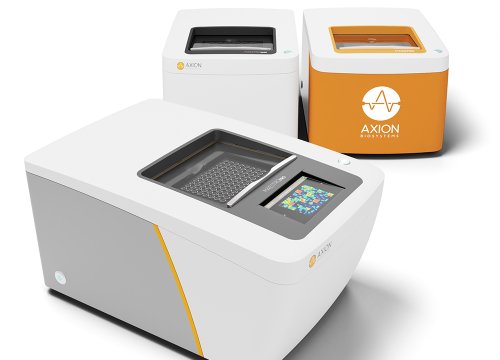
To assess functional consequences, the team used Axion’s Maestro MEA platform to record spontaneous electrical activity from midbrain organoids following SiO₂-NP exposure. MEA-based analysis revealed trends toward reduced spiking, firing rate, bursting, and network synchrony, despite the absence of apoptosis. Together, these results suggest that SiO₂-NPs can subtly alter neuronal function and network coordination in developing human neural models, underscoring the importance of functional electrophysiology for detecting non-cytotoxic, developmentally relevant neurotoxic effects in 3D organoid systems.